Tinghuai Wang

Reinforcement learning · Agentic AI

I am a Member of Technical Staff at QuTwo. Previously, I was the Director of Huawei Cloud Enterprise Intelligence Finland, leading the Multimodal AI research team in Huawei Helsinki Research Center. My recent research focuses on reinforcement learning and its applications in agentic AI.

I received my PhD from the University of Surrey and MSc from KTH and RWTH Aachen in machine learning and computer vision. I have more than 17 years of experience in research and innovation roles at industry research labs, including Huawei Helsinki Research Center (Director), Nokia (Principal Scientist), HP Labs (Researcher) and Sony Research Labs (Researcher). I have published more than 40 peer-reviewed international journals and conference publications, including top venues ICML, CVPR, AAAI, IJCAI, ICCV, BMVC, TVCG, TGRS, TMM, CVIU. My publications have won two IEEE best paper awards (MESH 2009, ICME 2015). I also (co-)invented 86 granted/pending patents filed in US and EU, with more than two dozen technology transfers to influential products. I have been serving as programme committee member for top AI venues such as ICML, AAAI, CVPR, ECCV and area chair of ICIP 2018, CVMP 2013–2016 and SIGGRAPH/NPAR 2012–2016. I was awarded as distinguished PC member of IJCAI 2018.
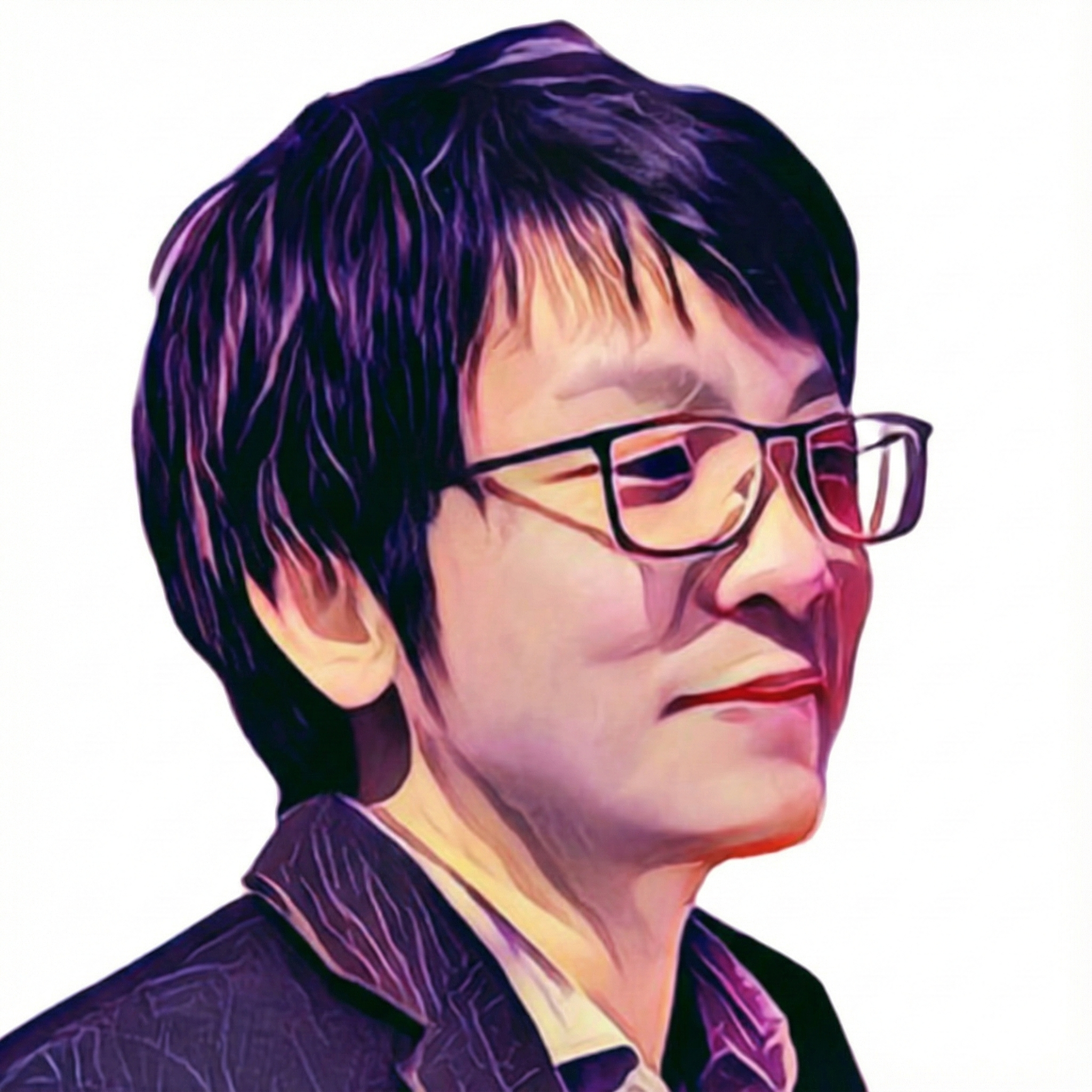
Portrait of Tinghuai Wang

Selected Publications & Patents

I'm generally interested in reinforcement learning, agentic AI and multimodal generative models. Representative papers and patents are listed as follows. Full list of publications can be found in my Google Scholar page.

* Equal contribution

Learning Multi-Timescale Abstractions for Hierarchical Combinatorial Planning

Vivienne Huiling Wang, Tinghuai Wang, Joni Pajarinen

ICML 2026The Forty-third International Conference on Machine Learning (ICML), 2026

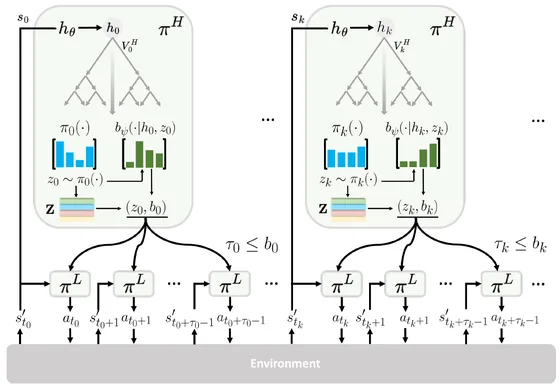
A model-based hierarchical framework for sequential stochastic combinatorial optimization that couples latent-space tree search with an SMDP-aware, multi-timescale world model and a subgoal-conditioned budget policy, enabling efficient lookahead over variable-duration decisions.

ReWind: Understanding Long Videos with Instructed Learnable Memory

Anxhelo Diko*, Tinghuai Wang*, Wassim Swaileh, Shiyan Sun, Ioannis Patras

CVPR 2025The IEEE/CVF Conference on Computer Vision and Pattern Recognition (CVPR), 2025

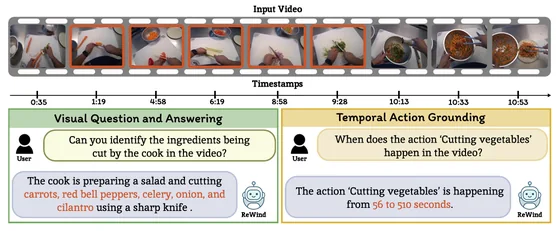
ReWind proposes a multimodal LLM for long video understanding that utilizes a dynamic learnable memory with a read-perceive-write cycle to efficiently store instruction-relevant temporal information and an adaptive frame selection mechanism to retrieve high-resolution spatial details, thereby achieving state-of-the-art performance on visual question answering and temporal grounding benchmarks.

State-Conditioned Adversarial Subgoal Generation

Vivienne Huiling Wang, Joni Pajarinen, Tinghuai Wang, Joni-Kristian Kämäräinen

AAAI 2023Thirty-Seventh AAAI Conference on Artificial Intelligence (AAAI), 2023

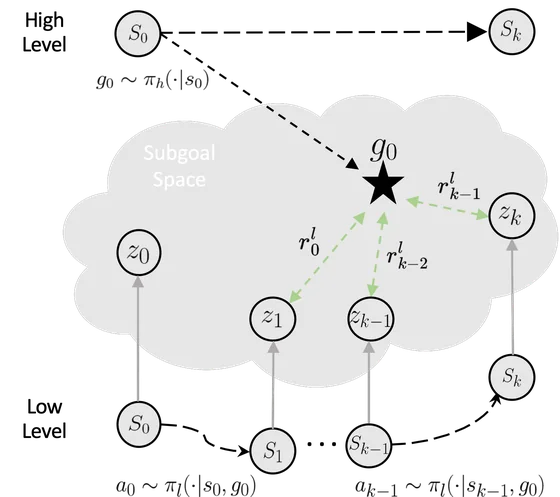
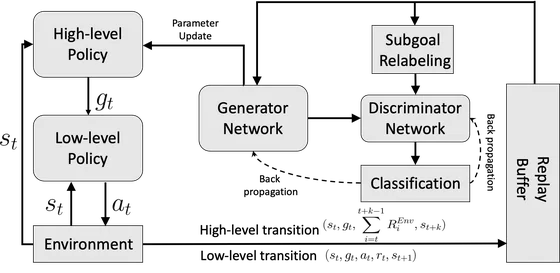
We propose a novel adversarially guided subgoal generation framework for goal-conditioned HRL to mitigate the issue of non-stationarity in off-policy training.

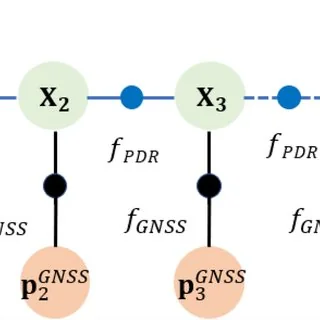
Smartphone PDR/GNSS Integration via Factor Graph Optimization for Pedestrian Navigation

Changhui Jiang, Yuwei Chen, Chen Chen, Jianxin Jia, Haibin Sun, Tinghuai Wang, Juha Hyyppä

TIM 2022IEEE Transactions on Instrumentation and Measurement, 2022

We propose two novel factor graph optimization (FGO)-based models to improve smartphone positioning accuracy by integrating pedestrian dead reckoning (PDR) with GNSS data. The first model combines position data from both PDR and GNSS, while the second tackles heading angle errors and smartphone misalignment by integrating PDR step length with GNSS.

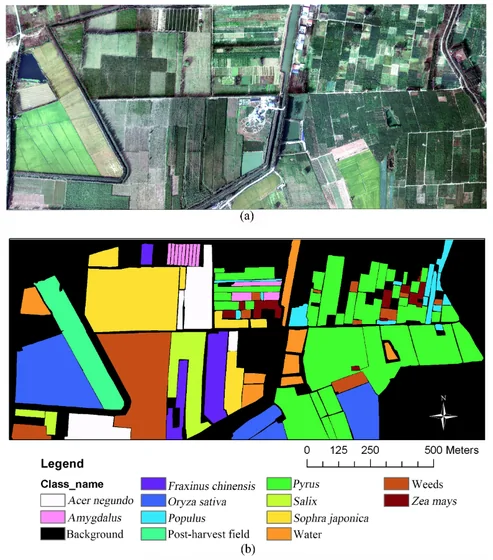
Tradeoffs in the Spatial and Spectral Resolution of Airborne Hyperspectral Imaging Systems: A Crop Identification Case Study

Jianxin Jia, Jinsong Chen, Xiaorou Zheng, Yueming Wang, Shanxin Guo, Haibin Sun, Changhui Jiang, Mika Karjalainen, Kirsi Karila, Zhiyong Duan, Tinghuai Wang, Chong Xu, Juha Hyyppä, Yuwei Chen

TGRS 2022IEEE Transactions on Geoscience and Remote Sensing, 2022

We investigate the tradeoffs between signal-to-noise ratio (SNR), spatial resolution, and spectral resolution in hyperspectral imaging for crop identification, addressing gaps in existing research. Results show that overall accuracy decreases with lower SNR and coarser spectral resolution but improves with lower spatial resolution. This study bridges the gap between hyperspectral sensor design and practical crop identification.

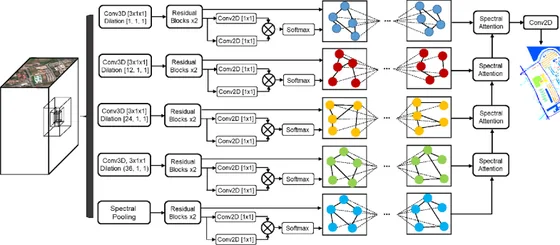
Hyperspectral Image Classification via Pyramid Graph Reasoning

Tinghuai Wang, Guangming Wang, Kuan Eeik Tan, Donghui Tan

ISVC 2020International Symposium on Visual Computing (ISVC), 2020

We design an architecture to encode the multiple spectral contextual information in the form of spectral pyramid of multiple embedding spaces. In each spectral embedding space, we propose graph attention mechanism to explicitly perform interpretable reasoning in the spatial domain based on the connection in spectral feature space.

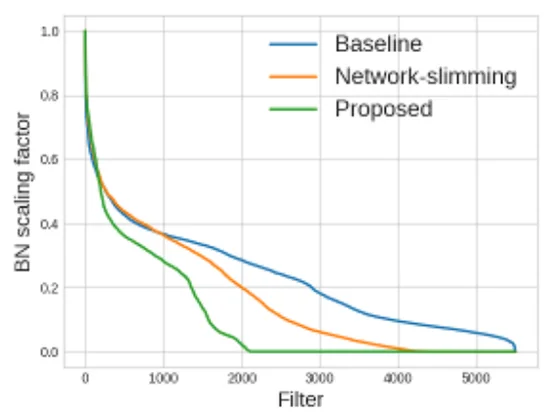
Simultaneously Learning Architectures and Features of Deep Neural Networks

Tinghuai Wang, Lixin Fan, Huiling Wang

ICANN 2019International Conference on Artificial Neural Networks (ICANN), 2019

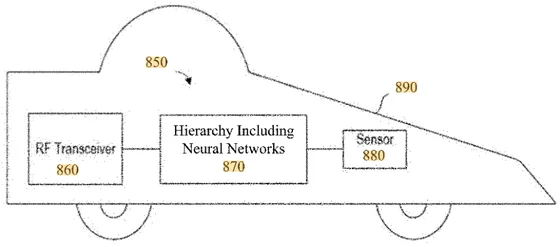
We propose a novel pruning loss to explicitly enforce the optimizer to focus on promising candidate filters while suppressing contributions of less relevant ones. In the meanwhile, we further propose to enforce the diversities between filters and this diversity-based regularization term improves the trade-off between model sizes and accuracies. Nokia proposal to ISO/IEC DIS 15938-17 Information technology — Multimedia content description interface — Part 17: Compression of neural networks for multimedia content description and analysis.

Cross-Granularity Attention Network for Semantic Segmentation

Lingyu Zhu*, Tinghuai Wang*, Emre Aksu, Joni-Kristian Kämäräinen

ICCV 2019ICCV, 2019

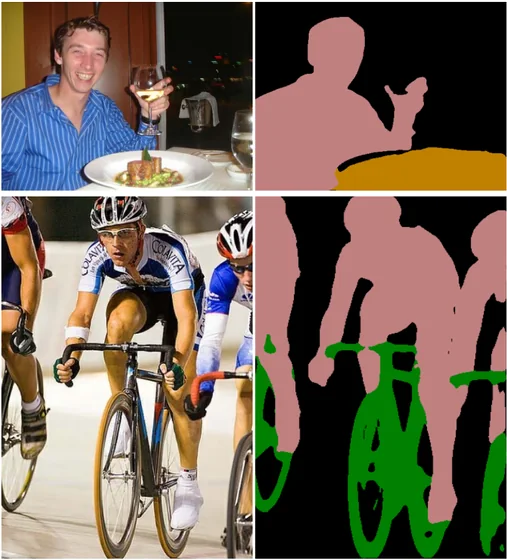
We propose a categorical attention mechanism to propagate consistent category-oriented information across multi-granularity contextual interpretations to close the semantic gap residing in CNN feature hierarchy; a cross-granularity contour enhancement mechanism is also proposed to propagate rich boundary cues from early layers to deep layers. These novel mechanisms boost the essentials in segmentation, i.e., region-wise semantic coherence and accurate object contour localization.

Portrait Instance Segmentation for Mobile Devices

Lingyu Zhu*, Tinghuai Wang*, Emre Aksu, Joni-Kristian Kämäräinen

ICME 2019IEEE International Conference on Multimedia and Expo (ICME), 2019

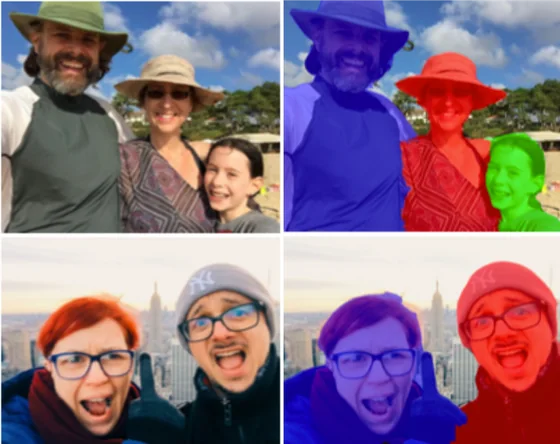
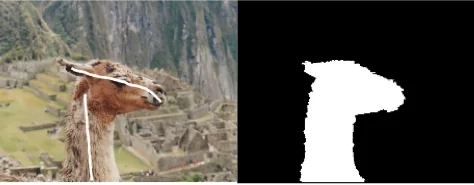
We propose a novel and efficient non-parametric affinity model to achieve efficient instance segmentation on mobile devices. We also present a portrait image dataset with instance level annotations dedicated to evaluating portrait instance segmentation algorithms.

Cross-Granularity Graph Inference for Semantic Video Object Segmentation

Huiling Wang, Tinghuai Wang, Ke Chen, Joni-Kristian Kämäräinen

IJCAI 2017International Joint Conference on Artificial Intelligence (IJCAI), 2017

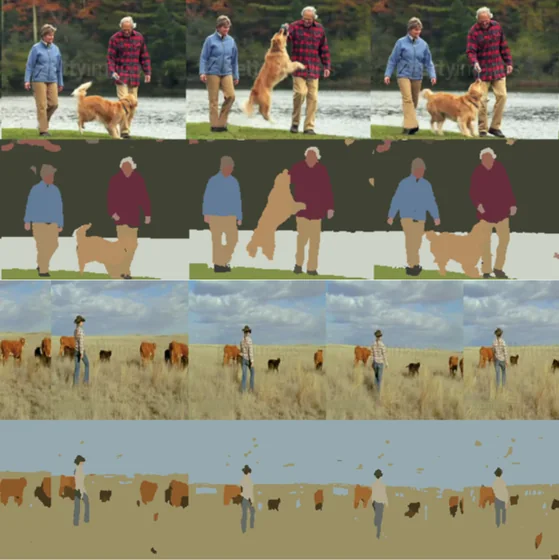
We address semantic video object segmentation via a novel cross-granularity hierarchical graphical model to integrate tracklet and object proposal reasoning with superpixel labeling.

Benchmarking Non-Photorealistic Rendering of Portraits

Paul L. Rosin, David Mould, Itamar Berger, John P. Collomosse, Yu-Kun Lai, Chuan Li, Hua Li, Ariel Shamir, Michael Wand, Tinghuai Wang, Holger Winnemöller

NPAR 2017Symposium on Non-Photorealistic Animation and Rendering (NPAR), 2017

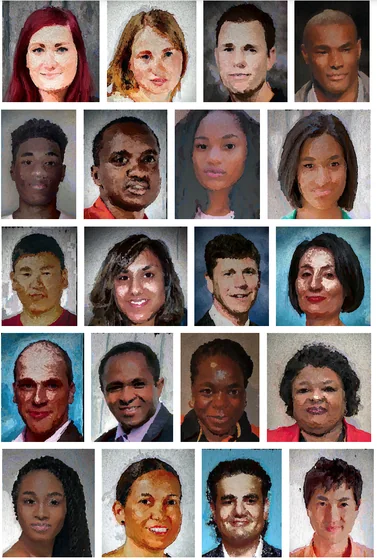
We present a set of images for helping NPR practitioners evaluate their image-based portrait stylisation algorithms.

Primary Object Discovery and Segmentation in Videos via Graph-Based Transductive Inference

Huiling Wang, Tinghuai Wang

CVIU 2016Computer Vision and Image Understanding, 2016

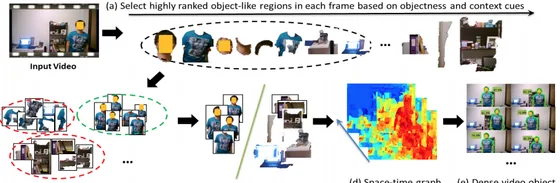
We present a novel algorithm that detects recurring primary object and learns cohort object proposals over space-time in video. Our core contribution is a graph transduction process that exploits both appearance cues learned from rudimentary detections of object-like regions, and the intrinsic structures within video data.

Boosting Objectness: Semi-Supervised Learning for Object Detection and Segmentation in Multi-View Images

Huiling Wang, Tinghuai Wang

ICASSP 2016IEEE International Conference on Acoustics, Speech and Signal Processing (ICASSP), 2016

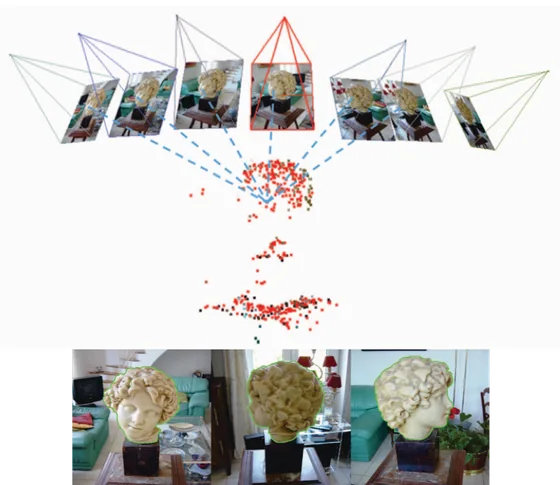
This paper presents a method to detect and segment recurring object from multi-view images. By harnessing a top-down explicit notion of object, our method overcomes the limitations of previous bottom-up methods that often mis-segment an object and delivers high quality segmentation.

TouchCut: Fast Image and Video Segmentation using Single-Touch Interaction

Tinghuai Wang, Bo Han, John Collomosse

CVIU 2014Computer Vision and Image Understanding, 2014

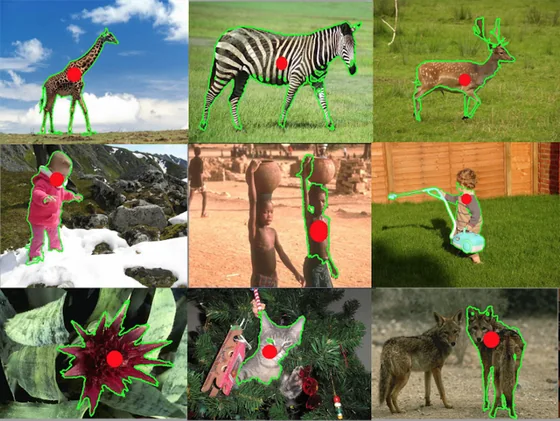
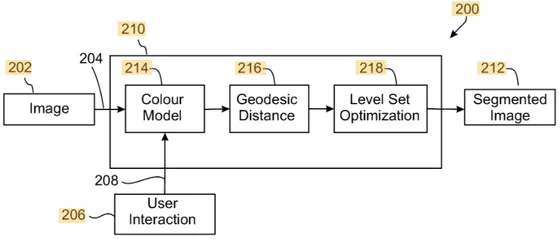
We present TouchCut; a robust and efficient algorithm for segmenting image and video sequences with minimal user interaction i.e., only a single finger touch to identify the object of interest in the image or first frame of video. This approach to visual object cut-out provides a practical solution for image and video segmentation on compact touch screen devices, facilitating spatially localized media manipulation.

Wide Baseline Multi-View Video Matting using a Hybrid Markov Random Field

Tinghuai Wang, John Collomosse, Adrian Hilton

ICPR 2014International Conference on Pattern Recognition (ICPR), 2014

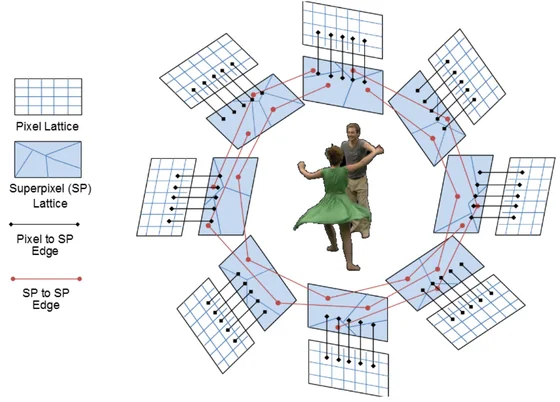
We present a novel multi-view video matting method suitable for incorporation into a 4DPC pipeline. The key contributions of this method are 1) the propagation of appearance and spatial information across views using superpixel matching and a novel MRF that solves the mattes simultaneously across all views, 2) the temporal propagation of appearance and spatial information forward in time.

Learnable Stroke Models for Example-based Portrait Painting

Tinghuai Wang, John Collomosse, Andrew Hunter, Darryl Greig

BMVC 2013British Machine Vision Conference (BMVC), 2013

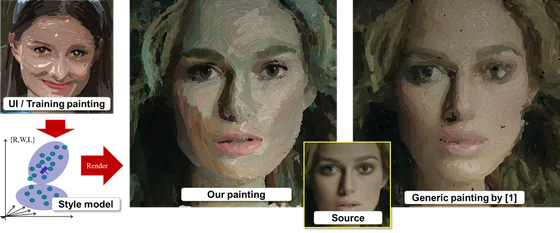
We present the first machine learning model which is capable of learning artistic style for portraits by analyzing training data from a human artist. Given a training pair — a source image and painting of that image — a non-parametric model of style is learned by observing the geometry and tone of brush strokes local to image features.

Markov Random Fields for Sketch based Video Retrieval

Rui Hu, Stuart James, Tinghuai Wang, John Collomosse

ICMR 2013ACM International Conference on Multimedia Retrieval (ICMR), 2013

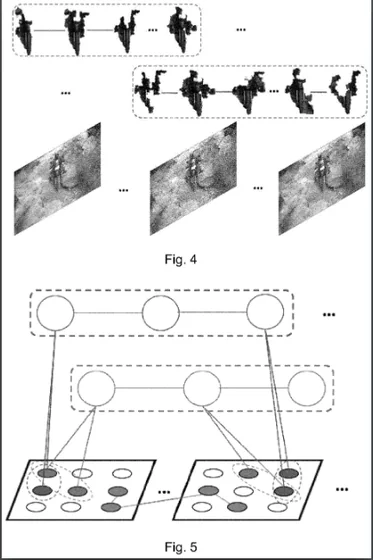
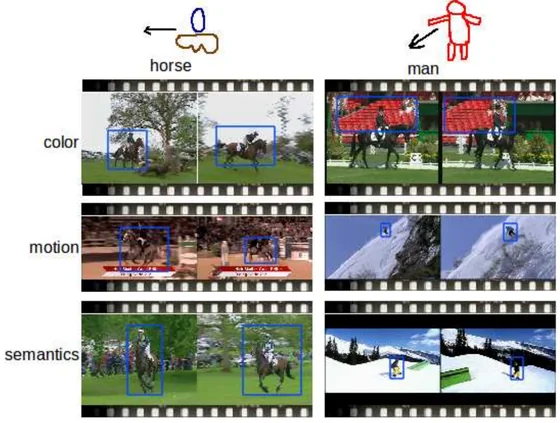
We describe a new system for searching video databases using free-hand sketched queries. Our query sketches depict both object appearance and motion, and are annotated with keywords that indicate the semantic category of each object. We parse space-time volumes from video to form graph representation, which we match to sketches under a Markov Random Field (MRF) optimization.

Stylized Ambient Displays of Digital Media Collections

Tinghuai Wang, John Collomosse, Rui Hu, David Slatter, Darryl Greig, Phil Cheatle

C&G 2011Computers & Graphics, 2011

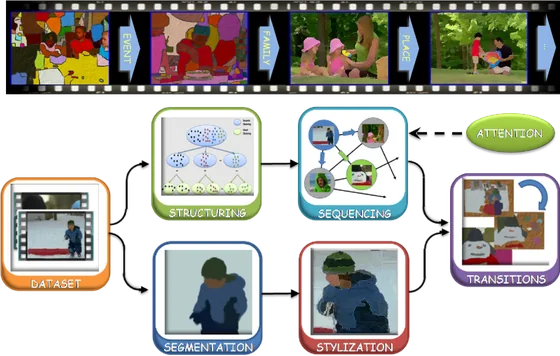
We present a system to breathe life into home digital media collections, drawing upon artistic stylization to create a “Digital Ambient Display” that automatically selects, stylizes and transitions between digital contents in a semantically meaningful sequence.

A Bag-of-Regions Approach to Sketch-based Image Retrieval

Rui Hu, Tinghuai Wang, John Collomosse

ICIP 2011IEEE International Conference on Image Processing (ICIP), 2011

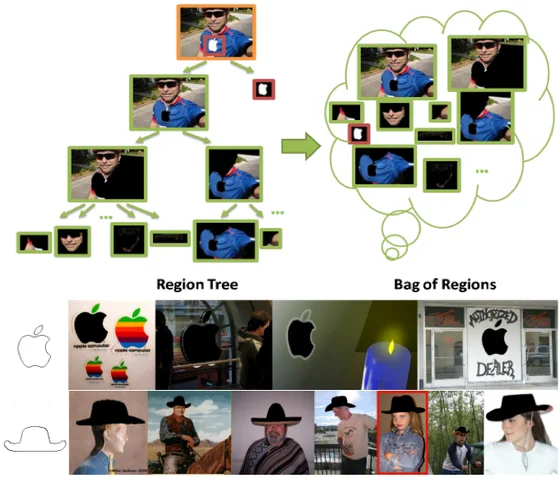
We present a sketch based image retrieval system built on a bag of regions which encodes the complete information of salient shapes at various level of details in the form of enclosed contours of regions presenting a coherent visual appearance.

An Evolutionary Approach to Automatic Video Editing

Tinghuai Wang, Andrew Mansfield, Rui Hu, John Collomosse

CVMP 2009Conference for Visual Media Production (CVMP), 2009

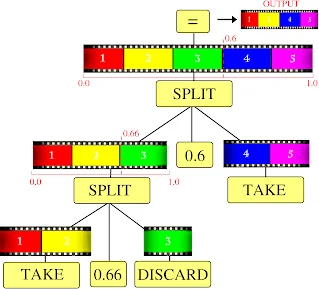
We interpret the sequence of editing operations applied to footage as a ‘program’ comprising cutting, panning and zooming constructs. We develop a Genetic Programming (GP) framework for representing and evolving such programs. Under this framework, the search for an aesthetically pleasing video edit becomes a search for the optimal genetic program. Our aesthetic criterion promotes the inclusion of people in shots, whilst penalising rapid shot changes or shot changes in the presence of camera motion.